
The question of who discovered America is more complex than many people think because Indigenous communities lived there long before European explorers arrived. From Native Americans and Viking explorers to possible Polynesian sailors, the history of America’s discovery includes several early encounters. This article explores the continent’s first inhabitants, Leif Erikson’s voyage, other possible visitors, and Christopher Columbus’s role in European exploration. Read on to discover what history reveals about who reached America first.

The Original Architects of the Continent

Long before European explorers arrived, the ancestors of Native Americans had already settled across the continent. They migrated from Siberia to North America through Beringia during the Ice Age, when lower water levels exposed a land connection near the Bering Strait. Over generations, they adapted to different climates and built strong communities.
As they moved south, they developed distinct groups, languages, technologies, and crops. They established large settlements linked to the Mississippian culture and built cliffside houses in the southwest, creating their own boundaries and rules long before European explorers searched for new lands.
Archaeological discoveries at Monte Verde, Chile, have challenged earlier ideas about when humans first inhabited the Americas. Some scientists also suggest that early migrants used boats and coastal routes known as the “kelp highway.” These findings highlight early human resourcefulness and show why Native Americans must be central to the discussion of who discovered America.
The Norsemen and Their Northern Outpost
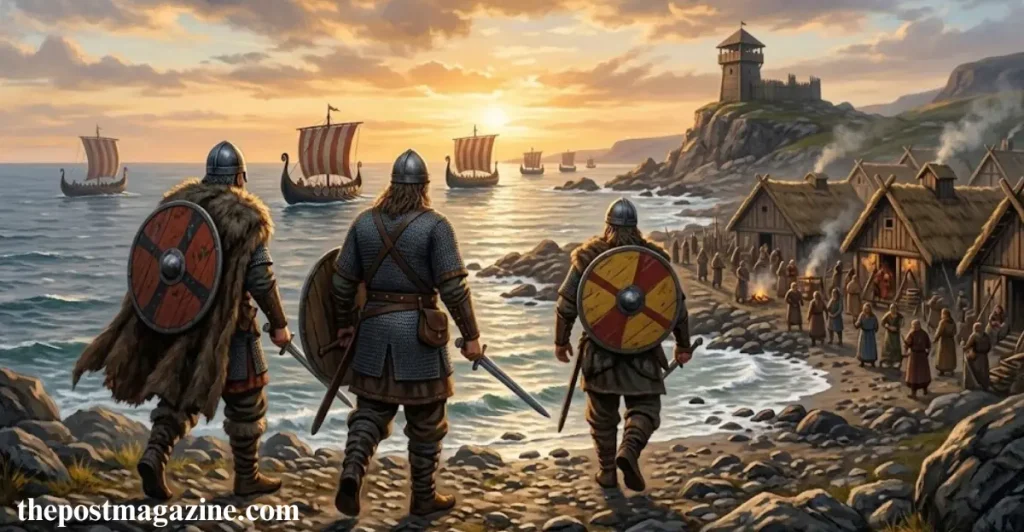
Long before Columbus, the Vikings became the first known Europeans to reach North America. Leif Erikson likely established a small settlement at L’Anse aux Meadows in Newfoundland around the year 1000. The remains of their sod houses provide archaeological evidence of this early European presence, although conflicts and isolation eventually led them to leave.
Norse sagas describe Vinland as a land rich in grapes and timber, attracting settlers from icy Greenland. Once considered myths, these stories gained credibility when archaeologists uncovered Viking tools and dwellings during the 1960s. The Norsemen navigated the North Atlantic in open wooden boats without modern compasses or maps, relying on their maritime skills and knowledge of the sea.
Despite reaching the continent, the Vikings did not establish a lasting settlement or transform global history. They used their outpost to gather resources such as wood and furs before returning to familiar territories. Their limited cultural influence highlights an important distinction: reaching America first as a European was not the same as permanently settling it or establishing widespread connections with other continents.
Other Possible Guests and Early Encounters
Several theories suggest that Polynesian sailors may have reached South America long before Columbus. Genetic evidence points to possible contact between Indigenous American groups and Polynesian populations, while sweet potatoes, a crop native to the Americas, have been found at ancient Polynesian sites. These findings suggest that skilled navigators may have crossed the Pacific Ocean in outrigger canoes and exchanged goods across vast distances.
Other proposed visitors include Chinese exploration fleets and Irish monks traveling in leather bound boats. However, these theories do not have the same level of supporting evidence, relying largely on disputed interpretations of ancient texts and speculative claims. Distinguishing archaeological evidence from historical speculation is essential when examining possible early encounters with the Americas.
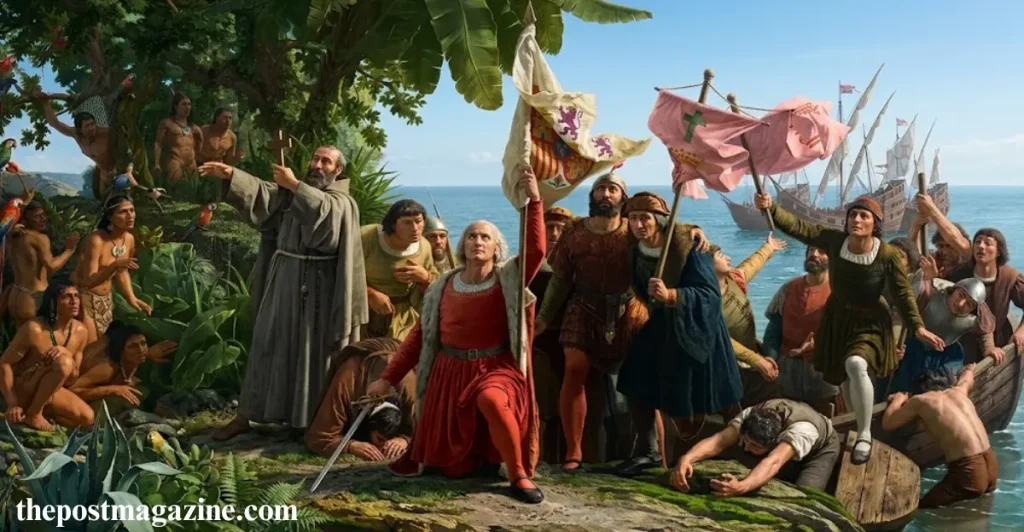
Rather than focusing only on who discovered America first, it is important to recognize the millions of Indigenous people whose ancestors inhabited the continent long before European arrival. Christopher Columbus helped initiate widespread European colonization, but he was not the first person to reach America, nor was he the first European to arrive. The idea of discovering a land already inhabited overlooks its established societies, cultures, and history.
Conclusion
The question of who discovered America has no single simple answer, as the continent was inhabited by Indigenous people long before European explorers arrived. The ancestors of Native Americans were its earliest known inhabitants, while Viking explorer Leif Erikson reached North America centuries before Christopher Columbus. Evidence also suggests possible early contact between Polynesian sailors and Indigenous communities, although some other theories remain unproven. Columbus played a major role in expanding European exploration and colonization, but he did not discover an uninhabited land. Understanding who discovered America first means recognizing its original inhabitants and the many journeys that shaped its history.
FAQs
Who discovered America first?
Indigenous peoples were the first inhabitants of America, arriving thousands of years before European explorers. Their ancestors built communities and developed cultures long before Columbus arrived.
Did Christopher Columbus discover America?
Christopher Columbus reached the Caribbean in 1492, but Indigenous peoples already lived in the Americas. Vikings had also reached North America centuries before his voyage.
Did Vikings discover America before Columbus?
Yes, Vikings reached North America before Columbus. Leif Erikson is associated with a Norse settlement at L’Anse aux Meadows in Newfoundland.
Who was the first European to reach America?
Leif Erikson is widely recognized as one of the earliest known European explorers to reach North America. Archaeological evidence supports the presence of Norse settlers there before Columbus.
How did the first people reach America?
Many researchers believe early humans migrated from Asia through the Bering Land Bridge during the Ice Age. Coastal routes may also have helped these early populations travel through the Americas.